
Strategic Planning of Correspondence Service Information System using TOGAF ADM Framework
##plugins.themes.bootstrap3.article.sidebar##
##plugins.themes.bootstrap3.article.main##
Abstract
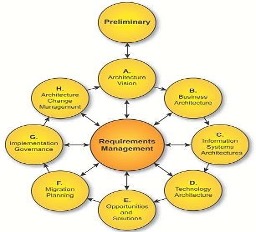
Rapid advancements in information technology have led to businesses and government organizations implementing information systems to improve corporate operations. One of the services provided by the village is correspondence, which includes creating letters of recommendation for application letters. In Leubatang Village, correspondence services are still conducted by hand, and data is gathered using physical books, which makes it difficult to locate data and leaves it susceptible to This study uses the TOGAF ADM framework to suggest strategic planning for Leubatang Village's communication information system. Architectural strategies, gap analyses, business architecture analyses, and technological needs analyses are all prepared using PEST analysis. This strategy planning can be implemented in two to three years, according to the blueprint. Leubatang Village’s correspondence services can be developed using the information system architecture’s design as a foundation for implementation and as a guide.
##plugins.themes.bootstrap3.article.details##

This work is licensed under a Creative Commons Attribution-ShareAlike 4.0 International License.
Authors who publish articles in CoreID Journal agree to the following terms:
- Authors retain copyright of the article and grant the journal right of first publication with the work simultaneously licensed under a CC-BY-SA or The Creative Commons Attribution–ShareAlike License.
- Authors are able to enter into separate, additional contractual arrangements for the non-exclusive distribution of the journal's published version of the work (e.g., post it to an institutional repository or publish it in a book), with an acknowledgment of its initial publication in this journal.
- Authors are permitted and encouraged to post their work online (e.g., in institutional repositories or on their website) prior to and during the submission process, as it can lead to productive exchanges, as well as earlier and greater citation of published work (See The Effect of Open Access).
References
N. I. Putri, M. I. Fudsyi, R. Komalasari, and Z. Munawar, “Peran Teknologi Informasi Pada Perubahan Organisasi dan Fungsi Akuntansi Manajemen,” JRAK (Jurnal Ris. Akunt. Dan Bisnis), vol. 7, no. 2, pp. 47–58, 2021, [Online]. Available: https://www.jurnal.plb.ac.id/index.php/JRAK/article/download/625/388
T. Triyuni and A. F. Wijaya, “Perencanaan Strategis Sistem Informasi Menggunakan Metodologi Ward and Peppard Pada Smpn 4 Salatiga,” Sebatik, vol. 25, no. 1, pp. 271–278, 2021, doi: 10.46984/sebatik.v25i1.1200.
Z. Rifai, T. Bratakusuma, and R. Arvianti, “Perencanaan Arsitektur Enterprise Desa Dengan Kerangka Kerja TOGAF ADM,” J. Sisfokom (Sistem Inf. dan Komputer), vol. 9, no. 2, pp. 177–184, 2020, doi: 10.32736/sisfokom.v9i2.803.
M. S. Huda and N. Susanti, “Sistem Informasi Pelayanan Surat Keterangan pada Kantor Desa (SI SUKET),” Indones. J. Technol. Informatics Sci., vol. 2, no. 2, pp. 75–80, 2021, doi: 10.24176/ijtis.v2i2.6275.
Y. Taslia, A. Sunoto, and Hendrawan, “Perancangan Sistem Informasi Pengarsipan Surat Menyurat Pada Kantor Desa Merlung,” J. Manaj. Teknol. Dan Sist. Inf., vol. 3, no. 1, pp. 365–373, 2023, doi: 10.33998/jms.2023.3.1.751.
K. Desa and B. Musara, “SISTEM SURAT-MENYURAT BERBASIS WEB DI,” vol. 1, no. 3, pp. 62–73, 2022.
F. G. M. Mabrur and M. A. Rosid, “Perancangan Sistem Pengajuan Surat Berbasis Web Pada Desa Banyutengah Kecamatan Panceng Kabupaten Gresik,” Semin. Nas. Inov. Teknol., pp. 126–129, 2022.
E. Ronando and E. Wahyudi, “Penerapan Sistem Pelayanan Surat Desa Sebagai Upaya Peningkatan Layanan Masyarakat di Desa Minggirsari Kecamatan Kanigoro Kabupaten Blitar,” Semin. Nas. Pengabdi. Kpd. Masy. 2021, vol. 1, no. 1, pp. 386–399, 2022, doi: 10.33086/snpm.v1i1.826.
Y. Saputra, N. I. Putri, E. S. Nurpajriah, D. Jaelani, and A. Hamdani, “Perencanaan Strategis Sistem Informasi untuk Mendukung Keputusan Organisasi dengan Ward dan Peppard,” Intern. (Information Syst. J., vol. 6, no. 2, pp. 137–145, 2023, [Online]. Available: http://jurnal.masoemuniveristy.ac.id/index.php/internal
Y. Feriyanto, A. A. Budiman, and L. I. Maulidia, “Perancangan Arsitektur Enterprise Menggunakan TOGAF (Studi Kasus: Desa Sukahaji),” J. Kaji. Ilm. Teknol. Inf. dan Komput., vol. 2, no. 2, pp. 50–56, 2024, doi: 10.62866/jutik.v2i2.117.
M. R. Fanani and F. Fikriyah, “TOGAF ADM pada Enterprise Architecture Planning untuk Sistem Informasi Manajemen Terintegrasi,” Smart Comp, vol. 11, no. 2, pp. 283–294, 2022.
I. L. Leta and F. S. Papilaya, “Perencanaan strategis sistem informasi dengan menggunakan metode TOGAF,” J. Ilm. Multidisiplin Indones., vol. 3, no. 1, pp. 85–94, 2023, [Online]. Available: https://journal.ikopin.ac.id/index.php/humantech
S. Yunita and M. Haspianto, “Analisis strategi perancangan arsitektur enter- prise sistem informasi menggunakan togaf adm (studi kasus: tk tunas bangsa smart),” JIPI (Jurnal Ilm. Penelit. dan Pembelajaran Inform., vol. 9, no. 3, pp. 1361–1373, 2024, [Online]. Available: https://jurnal.stkippgritulungagung.ac.id/index.php/jipi/article/download/5117/2141
T. Gantini, A. Adelia, D. T. Yulianti, J. Yeremia, and N. R. Dorojatun, “Analisis Arsitektur Bisnis Sistem Penerimaan Mahasiswa Baru dan Akademik,” J. Tek. Inform. dan Sist. Inf., vol. 6, no. 3, pp. 607–620, 2020, doi: 10.28932/jutisi.v6i3.3115.
I. A. Mastan and M. Stefanus, “Perancangan Enterprise Architecture Pada PT Vitapharm Menggunakan Framework TOGAF,” BIP’s J. BISNIS Perspekt., vol. 13, no. 2, pp. 117–129, 2021, doi: 10.37477/bip.v13i2.218.
F. F. Alim, F. Dewi, and S. F. S. Gumilang, “Arsitektur Enterprise Sistem Pemerintahan Berbasis Elektronik (Spbe) Sebagai Strategi Pengembangan Smart Village Pada Dimensi Village Service (Enterpreneurship),” JIPI (Jurnal Ilm. Penelit. dan Pembelajaran Inform., vol. 9, no. 2, pp. 889–904,